
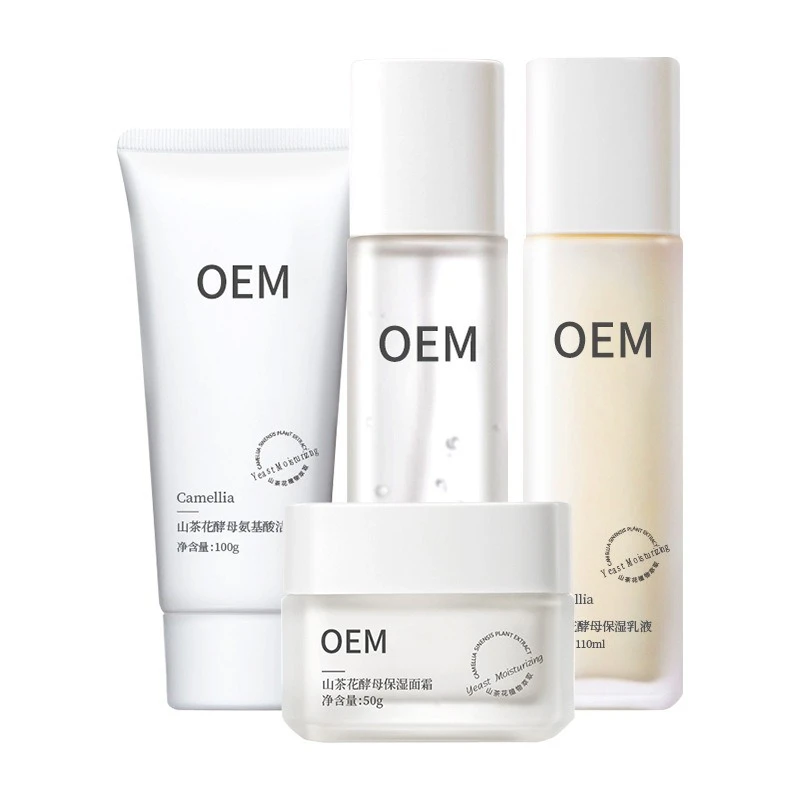
Choosing a private label cosmetics manufacturer is the fastest route from a brand idea to a sellable product — and the fastest route to disappointment if you pick on price alone. Private label means you adopt a supplier’s existing, proven formula and put your name on it, which shortens launch time and lowers development cost. The trade-off is that the manufacturer’s systems, quality, and capacity now define your customer experience. This buyer’s guide helps B2B beauty brands evaluate private label partners in China with the rigor the category demands.
What “private label” actually buys you
Private label is often confused with OEM and ODM, but the distinctions matter for your roadmap. In a pure private label model, the factory owns the formulation and you brand it; in OEM you may bring or co-develop a formula; in ODM the factory designs product and formula for you. For new brands, private label delivers speed and lower minimums, while custom work buys differentiation at the cost of time and capital.
A capable private label cosmetics manufacturer should let you customize far more than the label — fragrance, color, texture, packaging, and sometimes active concentration — without forcing you into a full custom-development project. The best partners blur the line, giving private-label speed with boutique-level flexibility.
Step 1 — Match the manufacturer to your category
Cosmetics is not one skill set. A factory brilliant at anhydrous balms may struggle with unstable water-based serums. Before shortlisting, confirm the partner has shipped your exact category at commercial scale:
– Skincare (creams, serums, cleansers, masks)
– Color cosmetics (lipstick, foundation, eyeshadow)
– Haircare and body care
– Sets and kits requiring multi-format filling
Ask for category-specific case studies and, ideally, references from brands with a similar positioning. A manufacturer’s breadth is useful, but depth in your category is what protects launch quality.
Step 2 — Understand the customization ceiling
The whole point of a good partner is room to make the product yours. During evaluation, pin down:
– Which formula parameters you can adjust (viscosity, scent, shade, active level)
– Whether they support bespoke base development when you outgrow stock formulas
– How packaging customization works — molds, decoration, sustainability options
– The cost and MOQ delta between stock and customized variants
If your ambition is a private label skincare line built through contract manufacturing, confirm the factory can carry you from a standard serum today to a differentiated formula tomorrow without re-qualifying a new supplier.
Step 3 — Decode MOQ and the real cost stack
Minimum order quantity is the number every startup fixates on, yet it is only one line in the economics. A credible private label cosmetics manufacturer will lay out:
– MOQ per SKU and per formula
– Setup, plate, and tooling fees
– Per-unit pricing at your realistic volume, not a teaser rate
– Whether packaging is sourced and managed for you
– Incoterms, freight, and who owns clearance
Low MOQ lowers your launch risk, but watch the per-unit math at scale. A low-MOQ private label factory guide for startups helps you model when rising volume justifies consolidating into a higher-MOQ, lower-unit-cost partner.
Step 4 — Verify quality systems and testing
Private label does not mean “off the shelf and hope.” The manufacturer should run the same quality controls as a custom house:
– Incoming raw-material certificates of analysis
– In-process checks on filling weight and defect rate
– Finished-goods microbial and stability testing
– An independent QA function with deviation and recall procedures
Request the actual GMP and ISO 22716 certificates with issuing bodies, and ask how non-conforming batches are handled. A partner that cannot clearly describe its quality system is a partner you will be explaining to customers after a failure.
Step 5 — Confirm compliance for your target markets
Where you sell dictates what the factory must support. For China, NMPA registration or filing applies; for the EU, CPNP notification; for the US, FDA establishment and labeling alignment. Your private label cosmetics manufacturer should maintain templates and a regulatory contact familiar with your destination, including:
– INCI ingredient listing and claims review
– Heavy-metal and microbial limit testing to market standard
– Proper labeling, batch coding, and traceability
– Support for periodic re-notification as formulas change
Export experience in your region is a strong signal — it means the factory has already absorbed the learning curve you would otherwise pay for.
Step 6 — Evaluate communication and project management
A manufacturer’s responsiveness in evaluation predicts responsiveness in production. Assess:
– A dedicated account or project manager for your brand
– Clear timelines with milestones (sample, pilot, bulk)
– Transparent change-order process
– Language and timezone overlap with your team
Poor communication at the quotation stage rarely improves under production pressure. Treat it as a scored criterion, not a soft one.
Step 7 — Run a sample and a paid pilot
Always request a physical sample before committing, then a paid pilot at near-commercial scale. Validate:
– Sensory and performance against your brief
– Filling accuracy and defect rate
– Packaging integrity through simulated transit
– Batch consistency if you order a repeat
A pilot converts a sales pitch into evidence. If the pilot exposes drift or weak support, you have spent little to avoid a costly mistake.
Step 8 — Protect your IP and exclusivity
Private label sits close to shared formulas, so IP and channel protection deserve explicit terms. Before signing, clarify:
– Whether your customized variant is reserved to you, or can be sold to competitors
– How formula ownership and confidentiality are handled in the contract
– Whether the factory watermarks or tags your packaging to prevent diversion
– Geographic or channel exclusivity options and their cost
A reputable private label cosmetics manufacturer will put these terms in writing rather than relying on goodwill. Vague assurances about “we won’t sell to your rival” are not protection; a defined exclusivity clause is.
Sustainability and packaging expectations
Buyers increasingly judge brands on packaging and footprint, and your manufacturer’s options shape what you can promise. Ask about recyclable and refillable formats, PCR (post-consumer recycled) content, mono-material structures, and the factory’s own waste and energy practices. Even on a private label track, the right partner helps you meet sustainability claims credibly instead of bolting them on as marketing.
Red flags to avoid
Walk away from manufacturers that refuse certificate details, lack a QA function, skip stability testing, pressure you into unsubstantiated claims, or quote a price that is implausibly below market. In private label, the cheapest quote usually hides the most risk.
Building a partnership that scales
The right private label cosmetics manufacturer grows with you. Start on stock formulas, add customization as you learn your customer, and graduate to co-developed lines when volume justifies it. Keep a partnership playbook with your Chinese cosmetics manufacturer so governance, forecasting, and quality stay aligned as you scale.
Final selection checklist
- Category depth confirmed with references
- Customization ceiling documented
- Total cost stack compared like-for-like
- Quality system and certificates verified
- Export/compliance pathway validated for your markets
- Communication and PM capability scored
- Sample and paid pilot passed against spec
Ready to find your private label partner?
If you are evaluating a private label cosmetics manufacturer and want a shortlist matched to your category, volume, and target markets, reach out to our team for a tailored recommendation. Contact us today to share your product brief, and we will help you move from concept to shelf with a partner you can trust.