
The global skincare market is booming, and with the rise of clean beauty, clinical formulations, and personalized routines, there has never been a better time to launch or scale a skincare brand. However, the success of your brand hinges entirely on one critical decision: choosing the right manufacturing partner.
For many global brands, startups, and e-commerce entrepreneurs, finding a reliable private label skincare manufacturer in China is the ultimate strategy to balance high-quality formulations with cost-effective production. China’s advanced beauty manufacturing hubs—particularly in regions like Guangzhou—supply a massive percentage of the world’s cosmetic products.
But how do you navigate this vast market, ensure compliance with international standards, and find a factory that aligns with your brand values?
This comprehensive B2B guide breaks down everything you need to know about sourcing skincare from China, satisfying E-E-A-T (Experience, Expertise, Authoritativeness, Trustworthiness) principles to give you an insider’s perspective on the industry.
Why Source from a Private Label Skincare Manufacturer in China?
Before diving into how to choose a partner, let’s look at why global beauty brands heavily rely on Chinese skincare factories.
-
Unmatched Supply Chain Ecosystem: China offers an all-in-one manufacturing ecosystem. From raw material sourcing and advanced R&D labs to custom packaging design and automated filling lines, everything is concentrated within highly specialized industrial zones.
-
Cost-Efficiency and Scalability: Lower labor and operational costs mean you can allocate more budget to marketing and branding. More importantly, Chinese factories are built for scale; they can effortlessly handle growth from small test batches to millions of units.
-
Cutting-Edge R&D: Modern Chinese skincare OEMs (Original Equipment Manufacturers) and ODMs (Original Design Manufacturers) are no longer just copycats. They invest heavily in bio-tech, innovative ingredient encapsulation, and trendy textures (like transformative oils or weightless gel-creams).
Key Criteria for Evaluating a Skincare Factory
In the skincare industry, product safety and efficacy are non-negotiable. Selling a substandard product can ruin your brand’s reputation overnight and lead to legal liabilities. When vetting a private label skincare manufacturer in China, prioritize the following standards.
1. International Certifications & Compliance
A legitimate, export-oriented factory must possess international certifications. Do not just take their word for it—ask for copies of their certificates and verify them.
-
GMPC (Good Manufacturing Practice for Cosmetics): Essential for both the US and European markets. It ensures the production environment is sterile and controlled.
-
ISO 22716: The international standard for cosmetics manufacturing safety.
-
FDA & EU Regulations: Ensure the factory’s laboratory can formulate products that comply with the ingredient restrictions of your target market (e.g., avoiding banned colorants or preservatives).
2. Strong R&D Capabilities and Formulation Library
A great manufacturer should act as your technical partner.
-
Stock Formulations (Private Label): Ask to see their existing, pre-tested formulation library. If you want a quick launch, utilizing their proven formulas for stable vitamin C serums, hyaluronic acid moisturizers, or anti-aging creams saves time and money.
-
Custom Formulations (OEM/ODM): If you want a unique selling proposition (USP), ensure they have an in-house team of cosmetic chemists who can develop custom formulations based on your specific ingredient lists or texture preferences.
3. Rigorous Quality Control (QC) Processes
Inquire about their internal testing protocols. A trustworthy manufacturer performs multiple rounds of testing before a single bottle leaves the warehouse:
-
Stability Testing: Ensuring the product doesn’t separate, change color, or lose efficacy under extreme heat, cold, or light.
-
Microbiological Testing: Verifying the formula is free from harmful bacteria and mold.
-
Packaging Compatibility Testing: Making sure the active ingredients do not react negatively with the plastic, glass, or aluminum packaging.
The Step-by-Step Process of Working with a Chinese Skincare OEM/ODM Factory
Partnering with an overseas manufacturer requires a structured workflow to prevent communication gaps. Here is the standard B2B process from initial contact to delivery:
Step 1: Initial Inquiry and Product Briefing
When you contact a manufacturer, come prepared with a detailed product brief. Instead of saying “I want a face cream,” specify:
-
Target audience and skin concerns (e.g., hydrating cream for sensitive skin).
-
Key active ingredients desired (e.g., Niacinamide, Centella Asiatica).
-
Preferred texture, scent profile, and packaging concepts.
-
Target launch date and estimated initial order volume.
Step 2: Sample Development and Feedback
The factory will send you samples based on your brief. Expect to pay a small sample fee (which is often refunded once you place a bulk order).
Pro Tip: Test the samples thoroughly. Check the skin feel, absorption speed, breakout potential, and how it interacts with other products. Do not hesitate to request revisions; 2 to 3 rounds of sample adjustments are perfectly normal.
Step 3: Quotation, Contract, and Proforma Invoice (PI)
Once the sample is approved, the factory will provide a formal quotation breaking down the costs of the bulk liquid, packaging materials, labeling, and labor. Ensure the contract clearly outlines the Minimum Order Quantity (MOQ), lead times, payment terms (typically 30% or 50% deposit, balance before shipping), and quality defect clauses.
Step 4: Bulk Production and Packaging Assembly
With the deposit paid, the factory orders raw materials and packaging. The production involves:
-
Batching: Mixing the formulation ingredients in large industrial vats.
-
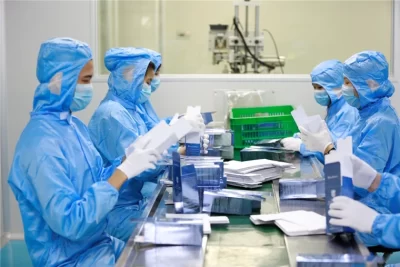
Filling and Sealing: Pumping the liquid into jars, tubes, or bottles in a cleanroom environment.
-
Secondary Packaging: Boxing, shrink-wrapping, and labeling the products.
Step 5: Final Inspection and Logistics
Before shipping, request a third-party inspection (such as SGS or QIMA) or ask the factory for their internal Quality Analysis (QA) report. Once cleared, the goods are packed onto pallets and shipped via your preferred logistics method—FOB (Free on Board) or EXW (Ex Works) are the most common B2B shipping terms used.
Understanding MOQs and Pricing Structures
One of the biggest hurdles for new brands is the Minimum Order Quantity (MOQ). Why do Chinese factories require minimums? Because setting up massive automated filling lines for a few dozen bottles is economically impossible.
Here is a general breakdown of realistic B2B MOQs in China’s skincare manufacturing hubs:
| Product Type | Typical MOQ (Private Label / Stock Formula) | Typical MOQ (Custom OEM Formulation) |
| Serums & Essential Oils | 1,000 – 3,000 units | 5,000+ units |
| Creams & Cleansers | 2,000 – 3,000 units | 5,000+ units |
| Sheet Masks | 5,000 – 10,000 units | 20,000+ units |
| Toner & Micellar Water | 1,000 – 3,000 units | 5,000+ units |
Note: MOQs are heavily influenced by your choice of packaging. If you use the factory’s stock packaging, MOQs are much lower. Custom-molded or uniquely colored packaging will drive the MOQs higher.
3 Critical Red Flags to Watch Out For
To protect your investment, keep an eye out for these warning signs during the vetting stage:
-
Trading Companies Posing as Factories: Some intermediaries claim to own the factory but are actually just trading companies. While trading companies have their place (they often offer lower MOQs and better English communication), they add a markup and give you less direct control over product quality. Look for a “Business License” that explicitly lists manufacturing or production rather than just sales/wholesale.
-
Suspiciously Low Prices: If a quote is significantly lower than competitors, they may be cutting corners by using low-grade raw materials, diluted active ingredients, or failing to run proper stability tests.
-
Vague Communication Regarding Ingredients: A reliable manufacturer will readily provide material safety data sheets (MSDS) and full ingredient listings with INCI names for regulatory compliance. If they hesitate or hide ingredient details, walk away.
Frequently Asked Questions (FAQ)
Supplier Comparison: How the Main Options Stack Up
When brands evaluate choose the best private label skincare manufacturer in china suppliers, they tend to compare factory scale first and overlook the variables that actually decide whether a launch goes well. The table below weights the six factors we score, and shows where each type of supplier tends to win and lose.
| Factor | What good looks like | Large factory | Mid-size specialist | Small workshop |
|---|---|---|---|---|
| Formula flexibility | Adaptation without re-running a full R&D cycle | Low | High | High |
| Minimum order quantity | Low enough for a first commercial run | High | Low–medium | Low |
| Compliance documentation | Certificates and COAs match the legal entity | Strong | Adequate | Weak |
| Communication and lead time | Named contact, replies within 24 hours | Slow (multiple layers) | Fast | Fast but variable |
| Export experience | Ships to your destination market regularly | High | Medium | Low |
| Pricing at volume | Lowest per unit once MOQ is met | Best | Competitive | Not competitive |
Scale is not the same as fit. A mid-size specialist will usually beat a large factory on your first three production runs, because the commercial terms are set for brands rather than for corporate tender volume.
Want numbers for your own product? Send us your target category,
packaging preference and estimated annual volume, and we will come back with a written quotation and MOQ options —
usually within one business day.
Q1: What is the difference between Private Label, OEM, and ODM in skincare?
-
Private Label: The manufacturer has pre-formulated, pre-tested products. You simply choose a formula, put your custom logo and packaging on it, and sell it. This offers the fastest time-to-market and lowest MOQs.
-
OEM (Original Equipment Manufacturer): You provide the exact formula, specifications, and ingredients, and the factory acts strictly as the production house to manufacture it to your precise blueprint.
-
ODM (Original Design Manufacturer): The factory handles everything—from custom R&D formulation based on your conceptual brief to packaging sourcing and final production.
Q2: Can Chinese skincare factories manufacture Cruelty-Free and Vegan products?
Yes, absolutely. There is a common misconception that all cosmetics produced in China must undergo animal testing. However, products manufactured in China exclusively for export to global markets have never been subject to China’s domestic animal testing requirements. Furthermore, Chinese factories can source certified vegan raw materials and provide documentation to support your brand’s clean, vegan, and cruelty-free claims in western markets.
Q3: How do I ensure the skincare products comply with US FDA or EU regulations?
When contacting a Chinese manufacturer, state your target market immediately. Top-tier export factories have specialized compliance and R&D teams who formulate products using only ingredients permitted by the FDA or EU (Cosmetic Regulation EC No 1223/2009). Always request the factory to provide a Certificate of Free Sale (CFS), MSDS (Material Safety Data Sheet), and a full INCI ingredient breakdown for your legal review.
Q4: What is the typical lead time for a private label skincare order?
For standard private label products using the factory’s stock formulas and stock packaging, production typically takes 20 to 30 days after design approval and deposit placement. For custom OEM/ODM formulas or unique custom packaging, the timeline can extend to 45 to 60 days, as it requires raw material synthesis, stability testing, and custom molding.
Q5: Can I request samples before committing to a bulk B2B order?
Yes, requesting samples is a mandatory step in the B2B skincare procurement process. Most professional manufacturers will charge a nominal fee ($50 to $150 per sample profile) to cover lab formulation costs and express shipping. This sample fee is routinely deducted or refunded from your final invoice once you place your initial bulk production order.
Conclusion: Take the Next Step Toward Your Brand’s Success
Finding the right private label skincare manufacturer in China takes time, patience, and diligent vetting. By focusing on certified factories, testing samples rigorously, and understanding the economics of MOQs, you can establish a highly profitable, scalable, and safe supply chain for your beauty brand.
Are you ready to bring your skincare concepts to life with premium formulations manufactured under strict international standards? Contact our expert team today to discuss your product specifications, request standard samples, or get a comprehensive, tailored B2B quotation for your next product launch.