
Sourcing skincare and cosmetics from China can be a massive catalyst for your brand’s growth. The manufacturing infrastructure, raw material access, and technological capabilities available are world-class. However, as an international skincare brand owner or procurement head, you are carrying a massive weight: regulatory compliance.
With strict frameworks like the US MoCRA (Modernization of Cosmetics Regulation Act) and the EU Regulation EC 1223/2009, you cannot afford to take a supplier’s word at face value. A sleek presentation slide claiming “We are GMPC and ISO certified” means absolutely nothing without forensic verification.
If a factory is using a borrowed certificate, a lapsed license, or operates out of a non-compliant facility, your brand bears the legal and financial fallout when custom seizures or consumer adverse-reaction lawsuits hit.
This comprehensive guide breaks down exactly how to verify GMPC (Good Manufacturing Practices for Cosmetics) and ISO 22716 credentials when vetting Chinese beauty contract manufacturers (OEM/ODM).
Cosmetics Factories in China
1. Decoding the Standards: GMPC vs. ISO 22716 vs. China’s Local License
Before verifying certificates, you must know what you are looking at. Many buyers mistake general business documents for quality compliance markers.
-
ISO 22716: This is the internationally recognized benchmark standard for the cosmetics supply chain. It details specific guidelines for production, control, storage, and shipment of cosmetic products. It focuses heavily on human, technical, and administrative factors affecting product quality.
-
GMPC (US/EU Standards): Good Manufacturing Practice for Cosmetics. Originally tailored to US FDA or European cosmetic guidelines, it ensures that production environments meet stringent air filtration, sanitation, and cross-contamination standards.
-
China’s Cosmetic Production License: This is a mandatory local government license issued by the provincial branch of the National Medical Products Administration (NMPA).
Critical Note: A Chinese manufacturer cannot legally produce cosmetics without the NMPA Cosmetic Production License. GMPC and ISO 22716 are voluntary international certifications used to prove readiness for global export. If a supplier has an ISO certificate but lacks a valid local production license, they are running an illegal operation.
2. The 4-Step Verification Sequence
Verifying a supplier’s claims requires a structured approach. Do not wait until you have paid a deposit to find out their certification belongs to a different legal entity. Follow this exact workflow during your initial supplier onboarding phase.
3. Digital Databases Every Global Buyer Should Use
You don’t need an on-site auditor to screen out 80% of fraudulent suppliers. Use these digital verification tools directly from your desk:
IAF CertSearch (International Accreditation Forum)
For ISO 22716 certificates, check if the registrar that issued the certificate is accredited by an IAF member body (such as ANAB, UKAS, or CNAS). You can use the official IAF CertSearch portal to input the factory’s registered English or Chinese name and verify their compliance status globally.
NECIPS (National Enterprise Credit Information Publicity System)
To verify the fundamental legitimacy of a Chinese factory, look up their Chinese legal name on the official NECIPS database . This platform reveals their official business scope. If their scope lists “trading,” “wholesale,” or “consulting” rather than “cosmetics manufacturing” , you are dealing with a middleman trading company, not a factory.
NMPA Official Portal
To verify their mandatory local production license, head to the provincial NMPA portal corresponding to the factory’s location (e.g., Guangdong MPA for factories in Guangzhou or Shenzhen). Look up their license number. The portal will display their cleanroom classification details, valid product categories (e.g., liquid units, cream/emulsion units, powder units), and history of administrative penalties.
4. Spotting the B2B Red Flags: Common Scams and Mismatches
When sourcing skincare custom formulations, bad actors will attempt to obscure deficiencies through several common tactics. Use this quick reference matrix to evaluate the documents your prospective supplier provides:
| Common Supplier Tactic | The Hidden Risk | How to Uncover and Correct It |
| The “Borrowed” Certificate | The supplier shares valid GMPC certificates belonging to a sister company, a parent group, or an unrelated third-party subcontractor. | Compare the exact facility address on the certificate to the address listed on your commercial contract and proforma invoices. If the streets don’t match, the certification is invalid for your production run. |
| The Trading Company Mask | A middleman broker presents a factory’s GMPC certificate as their own to secure a higher margin on your order. | Request the factory’s corporate bank account details. If the entity name on the certificate matches the name receiving your wire transfers, you are dealing direct. If it goes to an offshore trading account, they are a broker. |
| Out-of-Scope Production | A factory holds a valid ISO 22716 certificate for powder production (like eyeshadows) but uses it to claim compliance for your organic facial serum. | Read the “Scope of Certification” clause on the document. It must explicitly cover your product format (e.g., “Manufacture of leave-on emulsions, creams, and skin surfactant cleansers”). |
| Expired Status | The factory completed an initial audit years ago but failed its surveillance audits or let the certification lapse due to cost. | Check the specific expiration date on the certificate face and double-check it live on the registrar’s database (e.g., SGS, Intertek, or TÜV Süb database lookup). |
5. Beyond Paper: Conducting Localized Quality Audits
If your product formulas are highly complex or you are scaling to large minimum order quantities (MOQs), remote document verification should be followed by physical or localized verification.
If you cannot fly to China yourself, hiring a professional third-party inspection agency (such as QIMA, SGS, or Intertek) to run a local factory audit is a highly cost-effective insurance policy. A standard cosmetics factory audit checks for critical physical indicators:
-
Cleanroom Architecture: Air filtration systems (HEPA filters) creating negative or positive pressure zones, and level 300,000 or level 100,000 cleanroom compliance for sensitive eye-area and infant skincare production.
-
Water Purification Systems: Skincare formulas are mostly water. The factory must demonstrate a multi-stage Reverse Osmosis (RO) water purification setup with continuous microbial testing records.
-
Traceability Infrastructure: Clear separation between raw materials, quarantine zones, processing areas, and finished goods storage, with individual barcoding or lot labeling to handle potential product recalls seamlessly.
6. Frequently Asked Questions (FAQ)
Q1: Can a trading company hold its own GMPC or ISO 22716 certification?
No. GMPC and ISO 22716 are strictly facility-level certifications. They evaluate physical manufacturing environments, cleanroom air quality, water purification systems, and on-site production workflows. A trading company or sourcing agency that does not own a physical factory cannot hold these certifications under their own commercial name. If a trading company hands you a certificate, look closely at the facility address—it will belong to their downstream contract manufacturing partner.
Q2: How long are GMPC and ISO 22716 certificates valid for Chinese cosmetics factories?
Typically, these certificates are valid for a cycle of 3 years. However, validity is strictly contingent upon the factory passing mandatory annual surveillance audits conducted by the registrar (e.g., SGS, Intertek). When vetting a supplier, always check the “Issue Date” and “Expiry Date.” If a factory provides a certificate that is technically unexpired but they failed their yearly surveillance check, the certificate is invalid on the central registrar database.
Q3: Does a factory’s GMPC certification mean my custom formulation is automatically FDA or MoCRA compliant?
No, this is a dangerous misconception. GMPC and ISO 22716 certify the factory’s environment and operational discipline (preventing contamination, ensuring traceability). They do not certify that your specific product formulation, ingredient list, or packaging labels comply with the destination country’s laws. You must still conduct separate toxicological assessments, secure safety data sheets (SDS), and handle product listing compliance under regulatory frameworks like the US MoCRA or EU Cosmetic Regulation.
Q4: What is the minimum cleanroom classification required for high-quality skincare manufacturing in China?
For standard leave-on skincare products like facial serums, creams, and eye treatments, reputable Chinese OEM/ODM facilities operate under a Class 100,000 (ISO 8) cleanroom environment. Top-tier manufacturers targeting premium global brands often upgrade their mixing and filling zones to Class 10,000 (ISO 7). Anything less than Class 100,000 for primary filling operations introduces elevated microbial risks.
Q5: What should I do if a Chinese supplier refuses to share their certificate numbers due to “privacy”?
Treat this as an immediate red flag. Legitimate B2B cosmetics manufacturers in China are proud of their compliance records and readily share high-resolution certificates with serious buyers. If a supplier claims their certificate numbers are confidential, they are likely hiding an expired status, a mismatched corporate name, or a borrowed document. If you encounter hesitation, offer to sign a standard mutual Non-Disclosure Agreement (NDA); if they still refuse, terminate the vetting process.
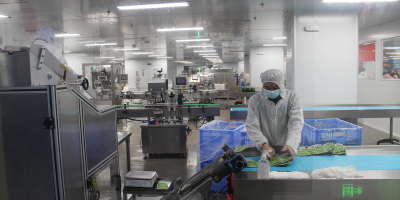
verifying GMPC certificate of China cosmetics factory
Conclusion: Build a Compliant Supply Chain
Verifying GMPC and ISO 22716 compliance isn’t just about ticking boxes for customs clearance—it’s about protecting your brand equity and ensuring consumer safety. By enforcing a strict verification sequence, cross-checking official databases, and checking for scope alignment, you secure a reliable, high-tier manufacturing partnership in China that can safely fuel your brand’s international scaling.
Ready to verify our standards?