
The global beauty landscape has fundamentally shifted. Today, “clean beauty” and “sustainability” are no longer optional marketing buzzwords; they are core business requirements. Brands that fail to integrate eco-friendly practices into their supply chains risk losing relevance with modern, conscious consumers.
For beauty brand founders, product managers, and enterprise sourcing executives, finding the right manufacturing partner is the single most critical decision in the product lifecycle. Increasingly, savvy brands are turning to a specialized sustainable skincare oem factory china to scale their production without compromising their green ethos.
Historically, China was viewed primarily as a destination for high-volume, low-cost mass production. However, massive technological upgrades and strict domestic environmental regulations have transformed the region into a global hub for advanced, sustainable cosmetics manufacturing.
This comprehensive guide breaks down everything you need to know about partnering with a sustainable skincare OEM factory in China, from vetting green formulations to navigating eco-packaging and international certifications.
The Evolution of Green Cosmetics Manufacturing in China
The transformation of China’s cosmetics manufacturing sector is driven by both global market demand and rigorous internal policies. Over the past few years, the Chinese government has instituted aggressive environmental standards, pushing factories to eliminate waste, lower carbon emissions, and upgrade their manufacturing infrastructure.
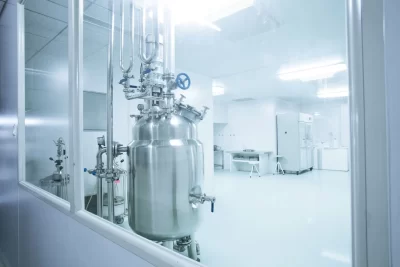
At the same time, major industrial clusters, particularly in the Guangdong province (such as the cosmetic manufacturing hubs in Guangzhou), have heavily invested in automated, energy-efficient machinery and advanced biotechnology labs.
Modern Chinese OEM (Original Equipment Manufacturer) and ODM (Original Design Manufacturer) facilities are no longer just mixing ingredients; they are leading the charge in:
-
Upcycled Ingredient Research: Developing active botanical extracts derived from agricultural by-products.
-
Cold-Process Emulsification: Utilizing manufacturing techniques that skip the heating phase, reducing factory energy usage by up to 50%.
-
Water-Saving Formulations: Creating anhydrous (waterless) skincare products, such as powder cleansers and solid serum bars, which lower shipping weight and conserve water resources.
By choosing a sustainable skincare OEM factory in China, international brands gain access to high-capacity automation and sophisticated supply chains while meeting stringent corporate social responsibility (CSR) goals.
What Makes a Skincare Factory Truly “Sustainable”?
When evaluating potential manufacturing partners, you must look past surface-level marketing claims. True sustainability spans the entire manufacturing ecosystem. A high-quality Chinese OEM partner will demonstrate compliance and innovation across three core pillars: formulation, operations, and packaging.
1. Sustainable & Clean Formulations
The heart of any skincare brand is its formula. A sustainable factory should offer robust research and development (R&D) capabilities dedicated to green chemistry.
-
Biodegradable Raw Materials: Formulations should avoid persistent environmental pollutants like microplastics, silicones (e.g., cyclopentasiloxane), and chemical UV filters that damage marine ecosystems (e.g., oxybenzone and octinoxate).
-
Ethical Sourcing & Traceability: The factory must provide transparent supply chain documentation for plant-derived ingredients, ensuring they are harvested without destroying local biodiversity.
-
Cruelty-Free Compliance: China has significantly relaxed its mandatory animal testing laws for imported and domestically manufactured “general cosmetics.” Leading OEM factories maintain strict cruelty-free practices, utilizing in-vitro (test tube) testing and reconstructed human epidermis (RHE) models to verify product safety.
2. Green Factory Operations and Energy Management
The operational footprint of the facility determines its true environmental impact. When auditing a factory, ask about their resource management systems:
-
Water Purification Efficiency: Cosmetics manufacturing requires massive amounts of purified water. Advanced factories utilize multi-stage Reverse Osmosis (RO) systems coupled with closed-loop water recycling programs to minimize wastewater discharge.
-
Renewable Energy Integration: Top-tier facilities install solar arrays on warehouse roofs and utilize smart LED lighting systems to reduce grid dependency.
-
Waste Management Protocols: Strict segregation of industrial waste, chemical neutralization of wastewater, and zero-waste-to-landfill initiatives are hallmarks of an elite eco-factory.
3. Circular Packaging Solutions
Packaging accounts for a substantial portion of the beauty industry’s carbon footprint. A sustainable OEM partner should offer more than just standard plastic bottles. They should actively guide you toward circular economy packaging options:
| Packaging Type | Materials Used | Environmental Benefit |
| PCR Plastics | Post-Consumer Recycled PET, PP, or HDPE | Diverts plastic waste from landfills; reduces virgin plastic production by up to 80%. |
| Glass & Aluminum | Infinitely recyclable infinite-lifecycle materials | Eliminates microplastic degradation; easily processed by standard municipal recycling plants. |
| Biodegradable/Compostable | PLA (Polylactic Acid), bamboo fiber, sugarcane bagasse | Breaks down naturally in industrial composting facilities without leaving toxic residues. |
| Refillable Systems | Replaceable inner pods with durable outer shells | Minimizes single-use packaging consumption; encourages long-term consumer brand loyalty. |
Verifying E-E-A-T: Compliance and Global Certifications
To protect your brand reputation and ensure seamless customs clearance in markets like the US, EU, and Australia, your manufacturing partner must hold verified international credentials. Do not rely on verbal assurances; request PDF copies of registrations and past audit reports.
ISO 22716 & GMPC
These are the foundational baselines for any cosmetics factory. ISO 22716 details the international standards for Good Manufacturing Practices (GMP) for cosmetics, while GMPC aligns with US FDA and European guidelines. They ensure that the factory operates under strict sanitary, tracking, and quality control protocols.
ECO-CERT and COSMOS
If your brand positions itself as strictly organic or natural, look for a factory with COSMOS-standard certification. This guarantees that a specific percentage of raw materials are organically farmed and that the manufacturing processes respect human health and the environment.
FSC (Forest Stewardship Council)
For outer paper cartons and shipping boxes, the factory should source from FSC-certified suppliers. This ensures that the wood pulp used to create the cardboard comes from responsibly managed forests that provide environmental, social, and economic benefits.
Step-by-Step Framework for Partnering with a Chinese OEM Factory
Successfully launching a product line requires clear communication and a structured approach. Because you are dealing with sustainable standards, the vetting process requires extra technical verification steps.
Overcoming Common Myths in B2B Eco-Sourcing
When sourcing a sustainable skincare oem factory china, many western brands fall victim to outdated misconceptions. Let’s look at the facts directly.
Myth 1: “Sustainable formulations from China are lower quality.”
The Reality: China’s top cosmetics labs utilize advanced biotechnology that rivals European and Japanese facilities. Many global luxury beauty conglomerates contract their manufacturing out to Chinese factories because of their unmatched speed-to-market and precision engineering. The key is choosing an established B2B factory over low-tier, unverified trading companies.
Myth 2: “Eco-friendly packaging requires massive MOQs.”
The Reality: Minimum Order Quantities (MOQs) for custom-molded PCR or biodegradable packaging used to be prohibitively high (often 20,000+ units). However, due to supply chain optimizations, many factories now offer standard stock eco-packaging with MOQs starting as low as 3,000 to 5,000 units, making it accessible for mid-sized indie brands.
Myth 3: “Green cosmetics cannot use effective preservatives.”
The Reality: Modern green chemistry has developed highly effective, plant-derived bio-preservatives (such as p-anisic acid, glyceryl caprylate, and various organic acids) that pass stringent USP/EP microbial challenge tests, giving clean skincare products a stable shelf life of 24 to 36 months.
Conclusion: Strategic Scaling for Your Clean Beauty Brand
Partnering with a sustainable skincare OEM factory in China provides a powerful competitive advantage. It allows your brand to leverage world-class production infrastructure, cutting-edge green chemistry, and cost-effective supply chains—all while remaining fiercely committed to environmental preservation.
The key to a successful partnership lies in rigorous due diligence, explicit communication regarding ingredient standards, and a shared commitment to transparency. As the global demand for ethical beauty continues to skyrocket, securing a reliable, eco-certified manufacturing partner is the smartest investment you can make for your brand’s future.