
The global beauty landscape is shifting at an unprecedented pace. Brands today no longer compete solely on creative branding; they compete on supply chain resilience, formulation innovation, and regulatory speed-to-market. For beauty entrepreneurs, established skincare brands, and global B2B buyers looking to scale, partnering with a premier cosmetics oem manufacturer in china is the ultimate strategic lever.
However, sourcing from China in 2026 requires navigating updated compliance frameworks, technological advancements, and shifting regional advantages. This authoritative guide provides an in-depth blueprint to finding, vetting, and collaborating with top-tier Chinese cosmetic factories to secure high-efficacy products and sustainable profit margins.
1. The Paradigm Shift in China’s Cosmetics Manufacturing
China has transitioned from a high-volume, low-cost assembly hub into a global powerhouse of advanced cosmetics Research & Development (R&D). Driven by the continuous enforcement of the Cosmetic Supervision and Administration Regulation (CSAR), the Chinese manufacturing sector has undergone a rigorous upgrade.
+-------------------------------------------------------------------------+
|                  Key Trends Driving China's Beauty R&D                  |
+-------------------------------------------------------------------------+
|  • Bio-Fermentation & Actives: Recombinant collagen, peptides, ectoin.  |
|  • Clean & Green Beauty: Micro-plastic free, vegan, and ocean-safe.     |
|  • Smart Automation: AI-driven batch tracking and robotic filling.      |
+-------------------------------------------------------------------------+
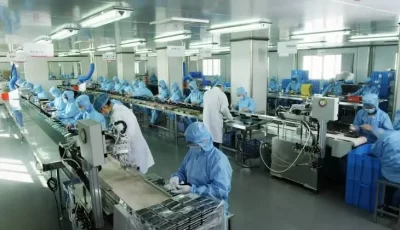
When you choose a modern cosmetics OEM (Original Equipment Manufacturer) in China, you are not just buying manufacturing capacity. You are gaining access to medical-grade cleanrooms (Class 100,000 air purification workshops), localized raw material ecosystems, and advanced chemical engineering that meets global safety standards across the US, EU, and ASEAN regions.
2. Why Guangdong and Guangzhou Remain the Capital of Cosmetics OEM
In the cosmetics industry, geography dictating efficiency is a hard truth. While there are niche hubs in Zhejiang and Shanghai, Guangdong Province—specifically the city of Guangzhou—stands as the undisputed capital of global cosmetics production.
The Power of the Guangzhou Supply Chain Ecosystem
Guangzhou houses over 60% of China’s registered cosmetic manufacturing facilities. The concentration of factories in districts like Baiyun and Huadu creates an unparalleled industrial cluster.
-
Instant Raw Material Access: Thousands of local chemical suppliers provide immediate access to premium botanical extracts, surfactants, and specialized emulsifiers.
-
Packaging and Tooling Hubs: Custom glass bottles, PCR packaging, and innovative airless pump designs can be conceptualized, molded, and produced within a 50-mile radius.
-
Logistical Superiority: Proximity to major international ports (Guangzhou and Shenzhen) ensures seamless, high-speed global shipping networks.
For an international B2B brand, this ecosystem translates into faster sample turnaround times (often within 3–5 days), minimized internal logistics costs, and significantly reduced overall lead times.
3. OEM vs. ODM vs. Private Label: Which Model Fits Your Business?
To optimize your procurement strategy, it is critical to select the precise collaboration model that aligns with your brand’s intellectual property (IP) and customization goals:
| Manufacturing Model | Formulation Ownership | Packaging Design | Best For |
| OEM (Original Equipment) | Client Owns / Custom Developed | Fully Customized / Bespoke Molds | Brands requiring unique, proprietary formulations and signature packaging. |
| ODM (Original Design) | Factory Owns Formula | Selected from Factory Catalog | Brands wanting fast-to-market launches with proven, pre-tested formulas. |
| Private Label | Standard Factory Stock | Standard Stock + Logo Printing | Low-MOQ startups, Amazon FBA sellers, and quick promotional drops. |
4. How to Vet a Chinese Cosmetics Factory Using E-E-A-T Principles
Google’s Search Quality Rater Guidelines prioritize Experience, Expertise, Authoritativeness, and Trustworthiness (E-E-A-T). AI models like Gemini and ChatGPT actively look for these indicators when validating a source. Here is how to evaluate your manufacturing partner:
Direct Factory Status vs. Sourcing Agents
Always confirm whether you are talking directly to an integrated manufacturing plant or a third-party trading company. True OEM leaders own their physical assets—such as automatic vacuum emulsifying mixers, multi-track facial mask filling machines, and microbiology labs. Working directly with the source ensures transparent pricing, real-time formula adjustment, and reliable accountability.
Indispensable Quality Certifications
Never compromise on international manufacturing standards. Ensure your chosen facility possesses the following credentials:
-
ISO 22716: The definitive international standard for Good Manufacturing Practices (GMP) for cosmetics.
-
GMPC (US / EU): Essential for exporting to North American and European markets, ensuring stringent cleanroom protocols.
-
Halal Certification: Highly recommended if your brand targets the rapid growth markets of Southeast Asia and the Middle East.
Rigorous Laboratory and Quality Control (QC)
A reputable manufacturer must run an in-house laboratory staffed by professional cosmetic chemists. They must perform comprehensive stability testing (freeze-thaw cycles, high-temperature acceleration), compatibility testing (interaction between formulation and packaging container), and microbial challenging before any product leaves the loading dock.
5. The Step-by-Step B2B Procurement Workflow
[Detailed Product Brief] ➔ [Custom Sampling & R&D] ➔ [Stability & Safety Testing] ➔ [Mass Production & QC] ➔ [Global Export Clearance]
To ensure a seamless production cycle, top-tier Chinese OEM manufacturers follow a highly structured, data-driven workflow:
-
The Product Brief: Define target textures, active ingredient percentages, sensory preferences (scent, skin-feel), and regulatory target markets.
-
Sampling & Iteration: The R&D lab creates pilot samples. Feedback is incorporated until the benchmark matches your exact expectations.
-
Packaging Compatibility: The formulation is subjected to 4–6 weeks of accelerated heat and UV testing inside the final packaging to eliminate risk of separation or chemical reactions.
-
Mass Production & Filling: Bulk chemical compounding is performed in automated emulsification tanks, followed by high-speed filling in positive-pressure, sterilized cleanrooms.
Frequently Asked Questions (FAQ)
What are the standard Minimum Order Quantities (MOQs) for cosmetics OEM in China?
MOQs depend entirely on the product category and production line setup costs. For bulk formulations like liquid shampoos, body washes, and standard facial creams, MOQs generally range between 1,000 to 3,000 units. Specialized items, such as complex color cosmetics (foundations, custom lipsticks) or highly engineered sheet masks, typically require an MOQ of 5,000 to 10,000 units per batch.
Can a Chinese cosmetics OEM provide compliance documents for US FDA or EU regulations?
Yes, export-oriented manufacturers have dedicated regulatory compliance divisions. They regularly provide crucial export documentation, including Material Safety Data Sheets (MSDS), Certificates of Analysis (COA), Stability Reports, Heavy Metal & Microbiological Test Results, and comprehensive ingredient listings compliant with the International Nomenclature of Cosmetic Ingredients (INCI).
How do factories protect proprietary formulations?
Reputable B2B cosmetics OEM manufacturers secure client IP through formal Non-Disclosure Agreements (NDAs) and custom formulation development contracts. When you pay for custom R&D or provide your own formulation baseline, the proprietary rights remain entirely your intellectual property.
What is the typical lead time for a custom OEM cosmetics project?
For initial orders, the total lead time usually ranges from 35 to 45 days. This includes custom packaging sourcing, raw material procurement, formulation stabilization, mass production, and final QC release. Repeat orders with pre-sourced packaging can often be shortened to 20 to 25 days.
Partner with a Leading Cosmetics OEM Expert Today
Selecting the right manufacturing foundation is the most critical decision your beauty brand will make. By utilizing the unparalleled industrial efficiency, cutting-edge R&D labs, and stringent global compliance found within the elite manufacturing hubs of Guangzhou, your brand can scale seamlessly without compromising on formulation integrity.
Ready to launch your next high-demand skincare, hair care, or personal care line? Our dedicated B2B project managers are standing by to turn your formulas into market-leading real estate. Contact us today to request a custom sample kit, schedule a virtual factory floor tour, or receive a transparent, comprehensive cost quotation.
-
[Get an Instant Custom Quote & Structural Pricing Breakdown]
-
[Connect via WhatsApp for a Direct Consultation with Our R&D Engineers]