
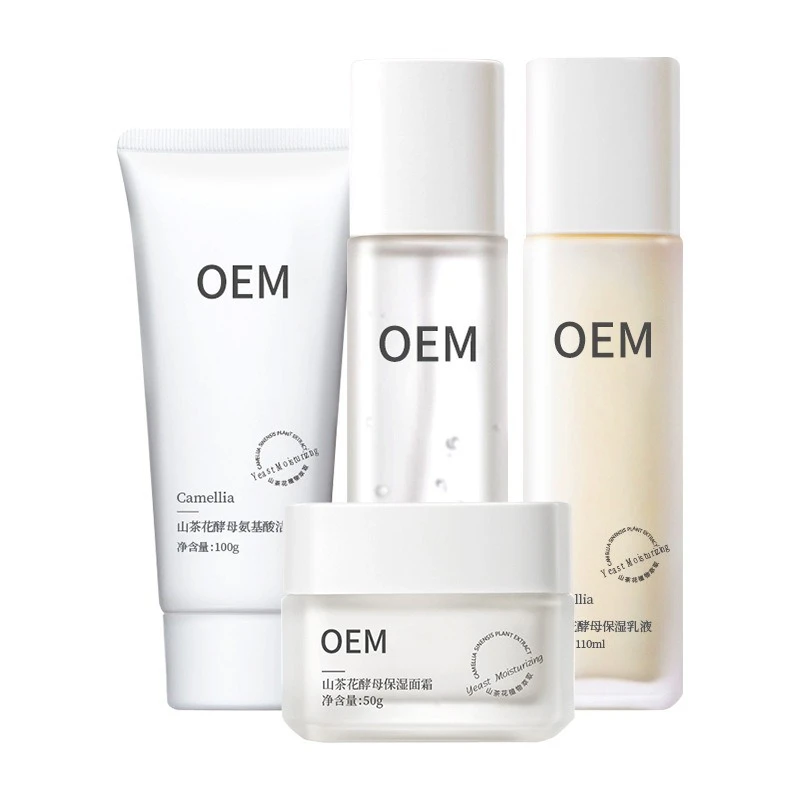
Every skincare routine starts with the same step, which is why a smart brand treats its cleanser manufacturer as a strategic partner rather than a commodity supplier. A facial cleanser is the first product a customer touches every morning and night, so its texture, scent, and after-feel decide whether they repurchase the whole range. Sourcing a skincare manufacturer in China that specializes in cleansers lets you pair proven formulation science with flexible volumes and export-ready compliance. This guide explains what a cleanser manufacturer actually does, which formats and claims convert in 2026, how to brief a factory, and how to avoid the formulation mistakes that sink new launches.
What a Cleanser Manufacturer Actually Does
A cleanser manufacturer develops and fills wash-off skincare across a wide spectrum of formats: foaming gels, cream cleansers, oil cleansers, micellar waters, powder-to-foam sticks, and cleansing balms. The core job is surfactant chemistry—balancing cleansing power against the skin barrier so the face feels clean, not tight. A capable facial cleanser manufacturer controls emulsion stability, pH, preservative systems, and rheology (the thickness and slip of the product) so the result is consistent from the first batch to the ten-thousandth.
Beyond the formula, the manufacturer owns stability testing, microbial challenge testing, packaging compatibility, and the documentation that export markets now demand. When buyers search for a “cleanser manufacturer China,” they are usually weighing three things at once: Can the factory formulate for sensitive skin? Can it prove its claims with certificates? And can it deliver at a minimum order quantity that fits a launch budget?
Why Source a Facial Cleanser Manufacturer in China
The Guangdong cluster—centered on Guangzhou and the wider Pearl River Delta—is one of the densest cosmetic supply ecosystems on earth. Surfactants, humectants, botanical extracts, and airless packaging are sourced within a day’s drive, which shortens the supply chain and speeds repeat orders. A contract manufacturing skincare relationship in this region gives you access to automated filling lines, cleanrooms, and formulation labs that would cost a startup a fortune to build alone.
Just as important, leading Chinese skincare factories have invested in cleanrooms and quality systems specifically to meet EU, UK, US, and ASEAN export rules. That means a credible cleanser manufacturer can deliver barrier-friendly, compliant product at scale—capabilities that small local workshops in high-cost markets often cannot match on lead time or unit economics.
Cleanser Formats and Which to Brief
The format you choose defines the entire brief. The main families a facial cleanser manufacturer can build are:
- Foaming gel and face wash. The everyday default. Easy to use, familiar, and ideal for normal-to-oily skin when built with mild amino-acid surfactants.
- Cream and lotion cleansers. Higher oil content, lower foam. The right choice for dry, mature, or compromised barriers.
- Oil cleansers and balms. The first step of double cleansing. Excellent for makeup and SPF removal and increasingly popular in the “gentle ritual” trend.
- Micellar water. No-rinse convenience for travel and sensitive skin; formulation is mostly about purified water, mild surfactants, and a stable micelle system.
- Powder-to-foam. A waterless format that activates in the hand. Lower shipping weight and a sustainability story that pairs well with a sustainable skincare OEM positioning.
For a focused first SKU, a mild foaming gel or a cream cleanser is the safest bet because the consumer already understands it. If you want a premium hook, an oil-to-milk cleanser or a powder format differentiates you on shelf.
Key Formulation Considerations for Cleansers
Cleansers live or die on after-feel, so the brief should specify more than “make it clean.” The points a serious cleanser manufacturer will discuss with you:
- Surfactant system. Amino-acid surfactants (e.g., sodium cocoyl glutamate) and alkyl polyglucosides are milder than legacy sulfates and support a “barrier-friendly” claim. A clean beauty manufacturer in China can usually offer sulfate-free builds.
- pH. Skin-friendly cleansers sit around pH 5.0–6.0. Specify the target range so the factory tunes the buffer.
- Humectants and soothing actives. Glycerin, panthenol, allantoin, and centella calm the skin after washing and justify a “soothing” claim.
- Preservative strategy. Wash-off products still need robust preservation; challenge testing is non-negotiable for export.
- Sensitivity and eyes. If the cleanser may touch the eye area, request low-irritation testing data.
These details are exactly why a structured private label skincare contract manufacturing workflow—with the formula documented in an SOP—beats ad-hoc sourcing.
Certifications and Compliance for a Cleanser Manufacturer
Green and “derma” claims are under regulatory scrutiny, so documentation is no longer optional. A credible facial cleanser manufacturer should be able to support:
- ISO 22716 / GMPC for cosmetic good manufacturing practice—see our GMP certified cosmetic manufacturer guide.
- Cruelty-Free / Leaping Bunny or PETA for no-animal-testing positioning.
- Vegan Society or similar if you avoid beeswax, lanolin, or animal-derived squalene.
- Market-specific dossiers for EU CPR, UK, US MoCRA, and ASEAN rules.
None of these alone makes a cleanser gentle, but together they convert a marketing sentence into a provable dossier your retailer and customers can trust. Our guide to choosing the right skincare manufacturer walks through the verification checklist.
How to Brief a Cleanser Manufacturer
A strong brief prevents costly reformulation. Include:
- Your target format (gel, cream, oil, micellar, powder) and the sensory profile you want.
- Claim targets stated explicitly—sulfate-free, vegan, fragrance-free, “for sensitive skin.”
- Preferred package type and PCR or refill options, with budget tolerance.
- Target markets and their compliance rules so the formula is built export-ready.
- Estimated volume and reorder cadence so the factory can plan raw-material sourcing.
If you need help turning a concept into a manufacturable formula, our formula development and customization team can take a brief from idea to a stable, compliant batch.
Low-MOQ Cleanser Launch Strategy
You do not need a container-load commitment to launch. A low-MOQ skincare manufacturer lets you pilot a cream cleanser or a powder-to-foam format, validate consumer response, then scale. The key is choosing a partner whose packaging (tubes, airless pumps, refill pouches) is already qualified at low volumes rather than only at mass scale.
For a wider routine, a serum manufacturer in China can supply the treatment step while your cleanser anchors the daily ritual—two SKUs that share one compliance and packaging system.
Common Mistakes When Sourcing a Cleanser Manufacturer
- Over-cleansing the brief. Specifying harsh sulfates to hit a low price point leaves skin tight and drives returns.
- Claiming without certificates. “Gentle” or “clean” with no backing invites takedowns under new claim rules.
- Skipping stability. Cleansers with natural extracts need rigorous challenge and thermal testing; skip it and you risk separation or contamination.
- Choosing price over traceability. A slightly higher cost with documented sourcing is worth far more than a cheap mystery supply.
These pitfalls are why a structured skincare manufacturer evaluation framework—rating formulation, compliance, and service—pays off before you sign.
How Cleansers Fit Your Full Skincare Line
Think in clusters, not one-offs. A cleanser manufacturer can anchor a routine with a gentle gel, a nourishing cream cleanser, and an oil balm under one compliance and packaging system, so your brand story is consistent across the shelf. For the broader build-out, our private label skincare sourcing guide maps how OEM, ODM, and private label models combine, and a private label eye cream manufacturer or vegan anti-aging skincare partner extends the range upward.
If you are deciding between build models, our OEM vs ODM explainer clarifies where cleanser customization lives in each, and our skincare OEM manufacturer in China page shows the end-to-end timeline from formula to mass production.
Ready to Build Your Cleanser Line?
Sourcing a cleanser manufacturer in China does not mean trading away gentleness or compliance—it means choosing a partner who can prove every claim with documentation and deliver at a viable MOQ. Whether you want a sulfate-free gel, a barrier-friendly cream cleanser, or a waterless powder format, our team can take you from brief to shelf with certified, export-ready production.
Contact our skincare team today to get a cleanser manufacturer quote and a tailored formulation recommendation for your 2026 launch.