

Brands that want to launch a clean, planet-friendly line are increasingly searching for a sustainable skincare OEM partner rather than a conventional cosmetic plant. A sustainable skincare OEM factory in China lets you combine low production cost, mature supply chains, and credible green credentials—if you know which capabilities actually matter. This guide explains what sustainable skincare OEM production involves, which certifications and materials separate genuine eco manufacturers from greenwashers, and how to brief a skincare OEM manufacturer in China so your formulas are both effective and defensible.
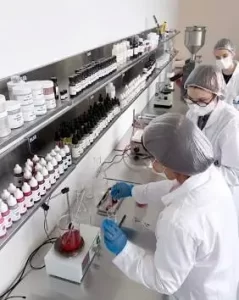
What “Sustainable Skincare OEM” Really Means
A sustainable skincare OEM is an original-equipment manufacturer that builds your branded skincare using environmental and social criteria across the full product life cycle—not just a recyclable bottle. That means responsible ingredient sourcing, renewable or low-carbon energy in production, water and wastewater management, refillable or mono-material packaging, and transparent labor practices. When buyers type “sustainable skincare oem factory china” into a search engine, they are usually evaluating three things at once: Can the factory formulate high-performance skincare? Can it prove its green claims? And can it do both at a viable minimum order quantity?
The good news is that the Guangdong cluster—centered on Guangzhou and the wider Pearl River Delta—has matured rapidly. Many facilities that once competed purely on price now run ISO 14001 environmental management systems, offer refill and PCR (post-consumer recycled) packaging, and formulate waterless or concentrated formats that cut shipping weight and carbon. Choosing a sustainable skincare OEM is therefore less about finding a niche boutique and more about auditing a conventional powerhouse for the right green stack.
Why China Is a Practical Base for Sustainable Skincare OEM
Sustainability is partly a logistics problem. A sustainable skincare OEM factory in China benefits from one of the densest cosmetic ingredient ecosystems on earth: emulsifiers, botanical extracts, ferment filtrates, and airless packaging are sourced within a day’s drive, which shortens the supply chain and reduces the emissions tied to long-distance freight between sub-suppliers. For an export brand, that localized supply chain is itself a sustainability advantage.
At the same time, leading Chinese OEMs have invested in cleanrooms, automated filling, and energy-efficient HVAC specifically to meet export compliance for the EU, UK, and North America. The result is that a credible clean beauty manufacturer in China can deliver vegan, cruelty-free, and low-waste skincare at scale—capabilities that smaller “eco-only” workshops in high-cost regions often cannot match on lead time or unit economics.
Core Sustainable Formulation Strategies
When you brief a sustainable skincare OEM, the formula is where most of the environmental impact—and most of the marketing claim—is decided. Four approaches dominate 2026:
- Waterless and concentrated formats. Powders, balms, and serum stacks that activate with water at home cut preservative load and slash transport weight. A waterless serum can ship at a fraction of the carbon of a conventional 30 ml bottle.
- Upcycled and traceable botanicals. Upcycled fruit seeds, recovered coffee extracts, and certified organic oils give you a story and a lower footprint than virgin exotic ingredients.
- Biodegradable surfactants and esters. Replacing certain ethoxylated surfactants with amino-acid or sugar-derived alternatives improves aquatic toxicity profiles for cleansers and foaming products.
- Minimal, multifunctional preservative systems. Fewer, gentler preservatives reduce both sensitivity risk and formulation complexity, supporting a “clean label” position.
Pair these with a vegan anti-aging skincare formulation strategy and you can build a premium, defensible line without animal-derived collagen or squalene.
Sustainable Packaging: The Visible 80%
For most consumers, the package is the product’s sustainability. A sustainable skincare OEM should offer more than “we can use recycled plastic.” Look for:
- Mono-material structures. A single resin type (e.g., PP or PET) is far easier to recycle than a pump mixing five materials.
- Post-consumer recycled (PCR) content. 30–100% PCR rPET and rPP are now standard from serious suppliers; ask for the certification of recycled content.
- Refill systems. Durable outer jars with refill pods or pouches extend the life of the primary vessel and reduce per-use waste.
- Aluminum and glass with low-carbon backing. Both are infinitely recyclable, though glass is heavy—use it where the brand story justifies the freight.
Working with a private label skincare manufacturer that sells helps you test which pack formats your audience actually adopts before committing to a full run.
Certifications That Back Up the Claims
Green claims are under regulatory fire in the EU and beyond, so documentation is no longer optional. A credible sustainable skincare OEM factory in China should be able to support:
- ISO 14001 for environmental management systems.
- ISO 22716 / GMP for cosmetic good manufacturing practice (see our guide to choosing the right skincare manufacturer).
- Cruelty-Free / Leaping Bunny or PETA for no-animal-testing positioning.
- Vegan Society or similar for vegan claims.
- FSC for paper and carton board.
- Carbon or energy audits (ISO 50001) where available.
None of these alone makes a product sustainable, but together they convert a marketing sentence into a provable dossier your retailer and customers can trust.
How to Brief a Sustainable Skincare OEM Factory in China
A strong brief prevents greenwashing and costly reformulation. Include:
- Your target claims (vegan, waterless, refillable, certain certifications) stated explicitly.
- Preferred package materials and PCR targets, with budget tolerance.
- Performance benchmarks—what the serum or cream must feel and do.
- Markets and their compliance rules (EU CPR, UK, US FDA state laws, ASEAN).
- Estimated volume and reorder cadence so the factory can plan sustainable materials sourcing.
If you need help translating a concept into a manufacturable formula, our formula development and customization team can take a brief from idea to stable, compliant batch.
Sustainable Skincare OEM and Low-MOQ Launch Strategy
You do not need a 50,000-unit commitment to start green. A low-MOQ skincare manufacturer lets you pilot a refillable serum or waterless balm, validate consumer response, then scale. The key is choosing a partner whose sustainable materials (PCR jars, refill pods) are already qualified at low volumes rather than only at container-load scale.
For brands building a focused range, a serum manufacturer in China with waterless concentrates is an ideal first sustainable SKU: high perceived value, small format, easy to ship light.
Common Mistakes in Sustainable Skincare OEM Sourcing
- Claiming without certificates. “Eco-friendly” with no backing invites takedowns under new green-claim rules.
- Over-packaging a green formula. A sustainable cream in a five-part glamour jar undoes the benefit.
- Ignoring stability. Waterless and natural-preservative formulas need rigorous challenge testing; skip it and you risk recalls.
- Choosing price over traceability. A slightly higher cost with documented sourcing is worth far more than a cheap mystery supply.
These pitfalls are why a structured contract manufacturing skincare relationship—with documentation baked into the SOP—pays off versus ad-hoc sourcing.
How a Sustainable Skincare OEM Fits Your Full Line
Think in clusters, not one-offs. A sustainable skincare OEM factory in China can anchor a waterless serum, a refillable moisturizer, and a vegan anti-ager under one compliance and packaging system, so your sustainability story is consistent across the shelf. For the broader build-out, our skincare manufacturer B2B sourcing guide maps how OEM, ODM, and private label models combine, and our partner process from formula to mass production shows the end-to-end timeline.
If you are deciding between build models, our OEM vs ODM explainer clarifies where sustainable customization lives in each.
Ready to Build Your Sustainable Skincare Line?
Sourcing a sustainable skincare OEM factory in China does not mean trading away performance or compliance—it means choosing a partner who can prove every green claim with documentation and deliver at a viable MOQ. Whether you want a waterless serum, a refillable moisturizer, or a fully vegan anti-aging range, our team can take you from brief to shelf with certified, low-waste production.
Contact our skincare team today to get a sustainable skincare OEM quote and a tailored green-material recommendation for your 2026 launch.